How Do Shopping Center Security Guard Services Protect Shoppers, Tenants, and Property Across the U.S.?
Shopping centers bring together shoppers, employees, tenants, delivery workers, contractors, and vehicles throughout the day. Because these properties often have multiple entrances, parking areas, stores, restaurants, and shared public spaces, security needs can vary significantly from one location to another.
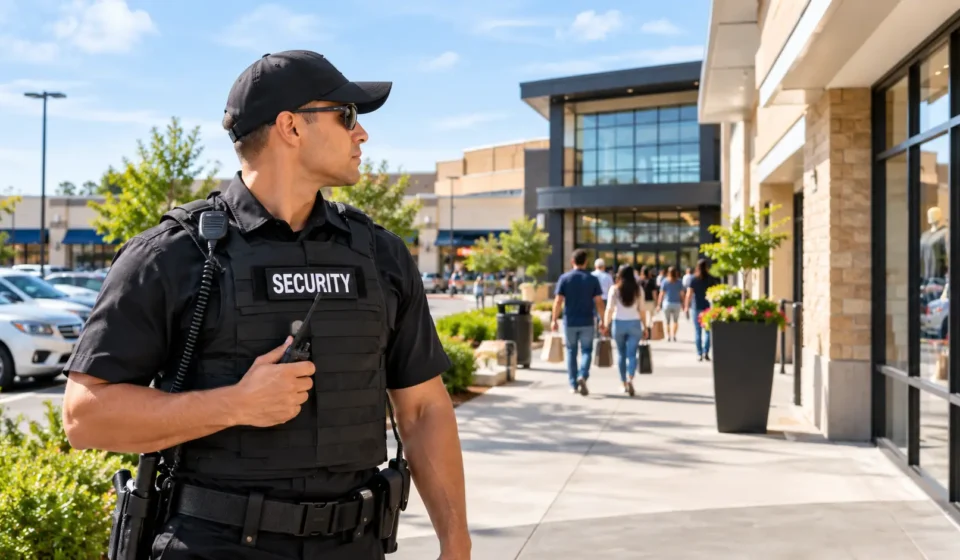
Shopping center security guard services provide a physical security presence that can help monitor activity, protect people and property, respond to incidents, support emergency procedures, and report security concerns to property management and appropriate authorities.
Effective security plans should be based on the property’s layout, operating hours, visitor patterns, identified risks, and assigned security personnel responsibilities. CISA recommends vulnerability assessments and layered protective measures for publicly accessible commercial facilities.
Key Takeaways
- Shopping center security should match the property’s layout, traffic, tenants, and operating schedule.
- Security guards can monitor entrances, common areas, parking lots, and other designated locations.
- Parking lot patrols can help identify suspicious activity, property concerns, and safety issues.
- Access control, surveillance, reporting, and emergency procedures can work together as part of a layered security program.
- Staffing levels should be determined by the shopping center’s size, operating hours, risks, and required security duties rather than a universal guard-to-property ratio.
What Do Shopping Center Security Guard Services Cover?
Shopping center security can involve much more than having a guard stand at an entrance. Depending on the property and service agreement, officers may be assigned to:
- Monitor public entrances and exits
- Patrol parking lots and garages
- Observe common areas and walkways.
- Monitor employee and restricted-access entrances.
- Conduct interior and exterior patrols
- Support access control procedures.
- Monitor suspicious or unusual activity.
- Respond to security incidents.
- Prepare incident reports
- Assist with emergency procedures
- Coordinate with property management.
- Contact law enforcement or emergency services when appropriate.
- Support special events and periods of increased activity.
Clearly define responsibilities before service begins. Industry guidance recommends that shopping-center security programs consider staffing, indoor and outdoor patrols, access points, procedures, and technology integration based on the individual property.
Why Is Security Important for Shopping Centers?
Shopping centers are publicly accessible commercial environments where people move between stores, parking areas, restaurants, sidewalks, and other shared spaces. This open environment makes security planning different from securing a private office or restricted facility.
A security program can help property managers establish a visible security presence while supporting observation, reporting, emergency response, and communication procedures.
Security should not be viewed as a replacement for law enforcement or emergency services. Instead, security personnel can serve as an additional layer within a broader safety and risk-management plan.
CISA identifies physical security, vulnerability assessment, emergency planning, suspicious-activity reporting, and layered protective measures as important components of security planning for public and commercial environments.
How Do Security Guards Protect Shopping Center Parking Areas?
Parking lots and garages can require dedicated attention because they connect vehicles and pedestrians with the shopping center’s stores and entrances.
Depending on the assignment, security officers may conduct scheduled parking patrols, monitor activity, identify safety concerns, observe entrances and exits, and report incidents.
CISA guidance for shopping venues specifically includes regularly patrolling parking areas, maintaining adequate lighting around parking areas and storefronts, and restricting vehicles near areas with higher pedestrian activity as potential protective measures.
Security officers may also assist with:
- Reporting damaged property
- Observing suspicious activity
- Monitoring restricted parking areas
- Supporting lost-and-found procedures
- Reporting vehicle or pedestrian safety concerns
- Checking designated areas during scheduled patrols
Parking patrols should match the property’s actual layout and operating patterns, not a one-size-fits-all schedule.
Can Security Guards Monitor Shopping Center Entrances?
Yes. Entrance monitoring can be one component of a shopping center security program.
Officers may monitor designated entrances, observe visitor activity, support access procedures for restricted areas, and communicate security concerns to management.
For employee entrances, loading areas, service corridors, and other non-public locations, access procedures can be particularly important. CISA recommends securing non-public entry points and checking them regularly as part of shopping-venue security planning.
However, access-control responsibilities should be clearly defined. A security officer’s authority depends on the assignment, applicable law, property policies, and the procedures established by the client.
How Do Security Guards Support Tenants and Employees?
Shopping centers often have multiple businesses operating under one property. Each tenant may have different operating hours, employees, deliveries, customer traffic, and security concerns.
A centralized security team can provide a consistent point of contact for property management and tenants.
Depending on the agreement, officers may:
- Monitor shared areas
- Report incidents affecting tenants
- Assist with emergency procedures
- Monitor employee entrances
- Conduct scheduled patrols
- Document security-related activity
- Communicate concerns to property management.
- Support special events or high-traffic periods.
Security programs can also include employee awareness and reporting procedures. CISA provides retail security awareness resources focused on recognizing and reporting suspicious activity.
What Role Does Surveillance Technology Play in Shopping Center Security?
Cameras, access-control systems, alarms, lighting, communication systems, and other technologies can support a physical security program.
However, technology and security officers serve different functions.
A camera can record or display activity, while a trained security officer can observe conditions in person, patrol designated areas, communicate with management, document incidents, and follow established response procedures.
For this reason, shopping centers may benefit from integrating technology with on-site security rather than relying on a single security measure.
Industry guidance recommends considering technology integration alongside staffing, patrols, access points, and security procedures.
Should Shopping Centers Use On-Site Guards or Mobile Patrols?
The appropriate option depends on the property’s security requirements.
On-site security guards provide a continuous physical presence during assigned hours. This can help when management needs regular monitoring of entrances, common areas, tenant spaces, or other designated locations.
Mobile patrol security involves scheduled visits to specific areas rather than continuous presence. Patrol officers may check parking lots, building exteriors, entrances, and other designated locations.
Some shopping centers may use a combination of both.
For example, a property could use an on-site officer during high-traffic hours while adding mobile patrols during other periods. The right structure depends on the center’s size, operating hours, layout, risk assessment, and required duties.
How Many Security Guards Does a Shopping Center Need?
No universal number of guards applies to every shopping center.
Staffing can depend on:
- Total property size
- Number of stores and tenants
- Parking lot or garage size
- Number of entrances and exits
- Operating hours
- Customer traffic patterns
- Restaurant and entertainment areas
- Special events
- Required patrol frequency
- Access-control requirements
- Number of areas requiring continuous monitoring
- Incident history and identified risks
- Duties assigned to security personnel
A smaller shopping center may require limited scheduled coverage, while a large retail property may need multiple officers, supervisors, patrol personnel, or different coverage levels throughout the day.
A property-specific security assessment can help determine the appropriate staffing model. CISA’s physical security assessment resources emphasize evaluating existing security measures and identifying vulnerabilities before selecting protective improvements.
What Should Property Managers Look for in a Security Company?
Before selecting a security provider, property managers should evaluate more than the advertised hourly rate.
Important questions include:
1. Does the company understand shopping-center security?
Retail and shopping-center environments have different operational requirements from offices, construction sites, or residential properties. Ask whether officers receive training relevant to retail and public-facing environments.
2. How does the company handle incidents?
Ask about incident reporting, communication procedures, escalation protocols, and coordination with emergency services.
3. Can the company provide flexible coverage?
Security requirements can change during weekends, holidays, special events, extended shopping hours, and other high-traffic periods.
4. Can security integrate with existing technology?
Ask whether officers can work alongside CCTV, access-control systems, alarms, radios, and other security technology already installed at the property.
5. How is performance documented?
Clear incident reports, patrol records, communication procedures, and other documentation can help management understand what happened and when.
Industry guidance also recommends reviewing emergency response capabilities, reporting procedures, industry-specific training, staffing levels, patrols, and the provider’s ability to customize the program to the property.
How Can Shopping Centers Prepare for Emergencies?
Emergency preparedness should be part of the overall security plan.
Shopping-center management can establish procedures covering communication, evacuation, emergency contacts, employee responsibilities, suspicious activity reporting, and coordination with first responders.
CISA recommends that shopping venues consider vulnerability assessments, emergency action planning, crisis communication plans, employee awareness, and protective measures appropriate to identified risks.
Security personnel should understand their specific responsibilities during an emergency. Their role may include notifying management, directing people according to established procedures, securing designated areas, documenting incidents, and contacting emergency services when required.
The exact response should always follow the property’s emergency plan and applicable law.
What Is the Difference Between Security Guards and Law Enforcement?
Private security officers and law enforcement officers have different roles and legal authority.
Security guards generally work under a private security assignment established by the property owner or security company. They can observe, report, patrol, enforce applicable property policies within their lawful authority, and respond according to their training and assignment.
Law enforcement agencies have governmental authority and are responsible for investigating crimes and enforcing the law.
For serious emergencies or suspected criminal activity, security personnel should follow established procedures and contact the appropriate emergency or law enforcement agency.
How Should Shopping Center Security Be Customized?
A strong security plan should start with the property, not a generic package.
Property managers can evaluate:
Property:
Size, layout, entrances, parking, tenant configuration, loading areas, and restricted locations.
People:
Shoppers, employees, tenants, vendors, contractors, delivery workers, and visitors.
Operations:
Opening and closing times, peak shopping periods, events, deliveries, and tenant schedules.
Risks:
Previously identified incidents, vulnerable areas, access concerns, parking-related issues, and other property-specific concerns.
Response:
Communication channels, incident reporting, emergency procedures, management contacts, and coordination with first responders.
This approach builds a security program around the actual operating environment rather than simply selecting a fixed number of guards.
What Should a Shopping Center Security Plan Include?
A practical plan may include:
- Property-specific risk assessment
- Defined security responsibilities
- Guard staffing and shift schedules
- Interior and exterior patrol procedures
- Parking lot and garage monitoring
- Access-control procedures
- CCTV and technology integration
- Incident reporting
- Emergency communication procedures
- Coordination with property management
- Employee and tenant reporting procedures
- Periodic review of security needs
The goal is to create multiple layers of protection rather than rely on a single measure. CISA describes layered security and risk-based planning as important approaches for physical security and public-facing facilities.
Shopping center security requires more than placing a guard at an entrance. Effective shopping center security guard services can combine visible security presence, scheduled patrols, access monitoring, incident reporting, emergency procedures, and technology integration based on the property’s specific requirements.
For property owners and managers across the United States, a useful starting point is evaluating the shopping center’s layout, operating schedule, tenant needs, parking areas, visitor patterns, identified risks, and required response procedures. From there, security coverage can be structured around the areas and times that require attention.
The right security model may involve on-site security guards, mobile patrol security services, or a combination of both. A property-specific assessment can help determine the appropriate staffing and coverage instead of relying on a one-size-fits-all approach.
FAQs
1. What do shopping center security guards typically do?
Shopping center security guards may monitor entrances, patrol parking areas, observe common spaces, support access-control procedures, respond to incidents, prepare reports, and assist with established emergency procedures.
2. Do shopping centers need security guards in parking lots?
Shopping center security plans can include parking areas. Depending on the property, guards may conduct scheduled patrols, monitor activity, identify safety concerns, and report incidents.
3. How many security guards does a shopping center need?
There is no standard number for every property. Staffing depends on factors such as property size, entrances, parking areas, operating hours, traffic, events, risks, and assigned security responsibilities.
4. Are mobile patrols enough for shopping center security?
Mobile patrols provide scheduled security checks rather than continuous on-site presence. They may suit some properties or be used alongside stationary security guards.
5. How should a shopping center choose a security company?
Property managers should compare relevant training, staffing capabilities, incident reporting, emergency procedures, patrol coverage, technology integration, communication, flexibility, and the provider’s ability to customize services to the property.