
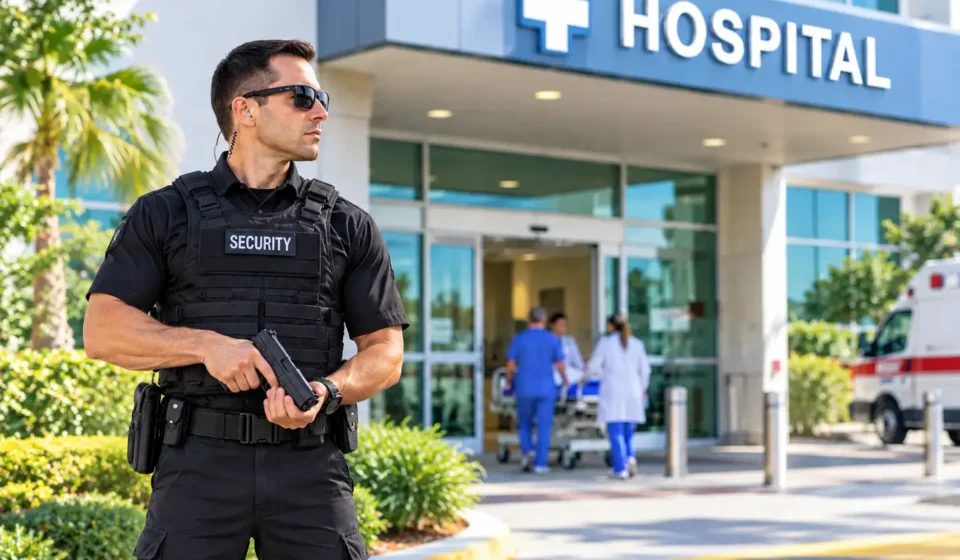
When Might a Hospital in Orange County Need Armed Security Guards?
Key Takeaways
- Hospitals may need armed guards when there is a serious threat to staff, patients, or visitors.
- Emergency departments and restricted areas may require extra security depending on the risks.
- Armed guards must have the required California licenses, permits, and training.
- Unarmed guards and mobile patrol can handle many day-to-day security needs.
- The right security plan helps hospitals protect people while keeping the environment safe and welcoming.
A hospital in Orange County may need armed security guards when there are serious threats, repeated violent incidents, or concerns that require a higher level of protection. Before hiring armed guards, hospital administrators should review past incidents, identify vulnerable areas, and assess existing security measures. Depending on the situation, security guard services in Orange County may include armed or unarmed guards, mobile patrol, vehicle patrol, and firewatch.
1. When There Is a Serious Threat to Hospital Safety
Hospitals may face threats from individuals who become aggressive or threaten staff and visitors. If there are credible threats of serious violence or repeated dangerous incidents, hospital management may consider armed security.
The decision should be based on the actual risk, not just general safety concerns. Security teams should also have clear procedures for reporting threats and contacting law enforcement when necessary.
2. When Emergency Departments Need Extra Protection
Emergency departments can become stressful when patients or visitors are upset, frightened, or behaving aggressively. In some cases, these situations can put healthcare workers and other patients at risk.
Hospitals should first assess whether trained unarmed guards, access control, and de-escalation procedures are enough. Armed guards may be considered when the risk assessment shows that additional protection is necessary.
3. When Behavioral Health Units Face Security Concerns
Behavioral health units need security arrangements that protect staff while treating patients with care and respect. Hospitals should focus on de-escalation, communication, and training suited to the needs of these units.
If there is a serious, documented threat, the hospital may consider armed security. Any decision should follow hospital policies, legal requirements, and patient safety guidelines.
4. When Restricted Areas Need Better Protection
Hospitals have sensitive areas, including pharmacies, medical supply rooms, staff-only corridors, and treatment units. Unauthorized access to these locations can create safety and privacy concerns.
Depending on the situation, hospitals may use different security services:
- Unarmed security guards: Monitor entrances, check access permissions, and report suspicious activity.
- Armed security guards: Provide additional protection when serious risks justify it and legal requirements are met.
- Mobile patrol: Check designated areas and respond to reported security concerns.
- Vehicle patrol: Monitor hospital grounds, parking lots, and parking structures.
- Firewatch guards: Monitor assigned areas for fire hazards and follow established emergency procedures when firewatch is required.
The right combination depends on the hospital’s security needs and the risks identified during an assessment.
5. When Hospital Parking Areas Need Extra Security
Hospital parking lots can raise security concerns, particularly at night or during early morning shifts. Staff, patients, and visitors may need extra support if there have been reports of theft, threats, or suspicious activity.
Hospitals in Irvine, Anaheim, and Santa Ana may consider better lighting, mobile patrol, vehicle patrol, and controlled access to improve parking area security. Armed guards may be appropriate if a serious threat justifies their presence.
6. What Should Hospitals Check Before Hiring Armed Guards?
Before hiring a provider, hospital administrators should review the facility’s security needs and confirm that the company and its guards meet California’s licensing requirements.
Important points to check include:
- Valid security guard registration and required firearms permits.
- Experience with healthcare facilities and emergency situations.
- Training in de-escalation, incident reporting, and emergency response.
- Clear procedures for handling threats and contacting law enforcement.
- Reliable staffing, communication, and backup coverage.
Hospitals should also confirm that the security plan works with their existing emergency procedures and patient safety policies.
Frequently Asked Questions
1. When should a hospital consider armed security guards?
A hospital may consider armed guards when it faces credible threats of serious violence or other risks that require additional protection.
2. Do all hospital emergency departments need armed guards?
No. The decision depends on the hospital’s risks, incident history, and existing security measures.
3. Can unarmed guards provide hospital security?
Yes. Unarmed guards can monitor entrances, manage access, patrol designated areas, and report suspicious activity.
4. What should hospitals check before hiring armed guards?
Hospitals should verify licensing, guard registration, firearms permits, relevant training, and emergency response procedures.
5. Can security guard companies in Orange County, CA, provide mobile patrol and firewatch?
Yes. Depending on the provider, hospitals may arrange mobile patrol, vehicle patrol, and firewatch services alongside other security coverage.