
What Is the Difference Between Armed Security Guards and Armed Mobile Patrols?
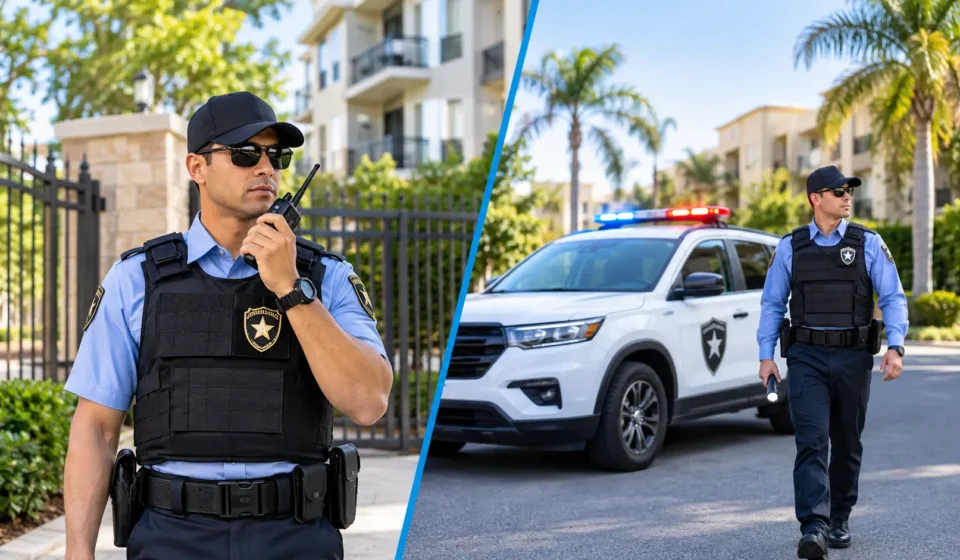
Armed security guards usually remain at a specific location to protect people, property, and daily operations. Armed mobile patrols travel between designated areas, inspect vulnerable points, and respond to security concerns during patrol rounds. Both services provide an armed security presence, but the right choice depends on your property’s layout, operating hours, and security risks.
Key Takeaways
- Armed security guards provide dedicated protection at a fixed location.
- Armed mobile patrols cover multiple areas through scheduled or randomized visits.
- Fixed guards suit access control, entrances, and locations that need continuous security.
- Mobile patrols help monitor parking lots, warehouses, and large properties.
- Some businesses benefit from combining armed guards, vehicle patrols, and unarmed security services.
How Armed Security Guards Protect a Fixed Location
An armed security guard companies stays at an assigned property and monitors activity throughout the shift. The guard may check identification, control entry points, watch surveillance cameras, and report suspicious behavior.
This service works well for properties that need a consistent security presence, including:
- Banks and financial institutions handling valuable assets.
- Hotels that need to protect guests and monitor entrances.
- Healthcare facilities that require controlled access and staff support.
- Construction sites storing expensive equipment and materials.
For example, a business in Corona may hire an armed guard to monitor its main entrance during operating hours. The guard can observe visitors, enforce access rules, and respond according to the site’s security plan.
How Armed Mobile Patrols Protect Larger Areas
Armed mobile patrols use marked or unmarked vehicles, depending on the service arrangement, to inspect assigned locations. Officers follow scheduled or randomized patrol routes and check areas where security risks may develop.
Mobile patrols can help protect:
- Warehouse buildings, loading docks, and storage yards.
- Apartment communities, parking lots, and shared spaces.
- Commercial properties with multiple entrances.
- Construction sites in nearby Riverside County communities.
A vehicle patrol officer may inspect gates, check doors, look for property damage, and report unusual activity. Patrol frequency depends on the contract, site conditions, and identified risks.
Unlike a guard stationed at one entrance, a mobile patrol officer moves between designated areas. However, the officer may not be present at every location when an incident occurs.
What Are the Main Differences Between These Services?
| Primary role | Protect one assigned location | Inspect multiple designated areas |
| Presence | Usually stationed on-site | Moves between locations |
| Access control | Can monitor entrances continuously | Checks access points during patrol visits |
| Best suited for | Banks, hotels, and high-risk facilities | Warehouses, parking lots, and large properties |
| Coverage | Focused on a specific post | Covers several locations or zones |
| Main limitation | May not cover distant parts of a large property alone | May leave gaps between patrol visits |
Both services can deter suspicious activity and help document incidents. Neither guarantees that theft, trespassing, or other security incidents will never occur.
Which Service Should Your Business Choose?
Start by identifying where incidents are most likely to happen and whether your property needs continuous supervision.
Choose armed security guards when:
- Your entrance needs continuous monitoring.
- Staff, visitors, or valuable assets need a dedicated security presence.
- Your facility faces specific, documented security risks.
- You need consistent observation and immediate on-site reporting.
Choose armed mobile patrols when:
- Your property covers a large area.
- Several buildings or parking areas need regular checks.
- You need visible security visits outside business hours.
- Your budget doesn’t allow a dedicated guard at every location.
Some businesses need both services. A warehouse may use an armed guard at its main gate while mobile patrols inspect its perimeter and parking areas. Unarmed security guards can also handle reception and visitor management when an armed presence is unnecessary.
Firewatch services may be appropriate when a property needs a dedicated fire watch because the fire alarm or sprinkler system is impaired. The assignment must follow applicable fire codes and local authority requirements.
What Should You Check Before Hiring an Armed Security Company?
Compare more than the hourly rate. Ask about officer training, site-specific procedures, incident reporting, supervision, insurance, and emergency response plans.
If you operate in California, verify that the provider holds the required state license. The California Bureau of Security and Investigative Services also requires armed security personnel to meet applicable registration and firearms permit requirements.
For businesses in Corona and nearby communities, choose a provider that can explain how its proposed coverage addresses your property’s actual risks.
Frequently Asked Questions
1. Are armed security guards better than armed mobile patrols?
Neither service is automatically better. Armed guards suit properties requiring continuous on-site protection, while mobile patrols suit properties that need periodic checks across multiple areas.
2. Can armed mobile patrols respond to emergencies?
Yes, according to their assignment, availability, and established response procedures. Response times vary, so businesses should confirm coverage expectations before signing a contract.
3. Do warehouses need armed guards or mobile patrols?
Warehouses may benefit from either service or both. Facilities with valuable inventory, frequent deliveries, or documented threats may need a dedicated guard alongside perimeter patrols.
4. Can businesses combine armed and unarmed security services?
Yes. Businesses can assign armed officers to higher-risk areas and unarmed guards to reception, visitor management, or routine access control, depending on their risk assessment.
5. How can I choose among armed security guard companies?
Compare licensing, relevant industry experience, training standards, supervision, insurance, reporting procedures, and service coverage. Ask each company to explain how its plan addresses your property’s specific risks.